
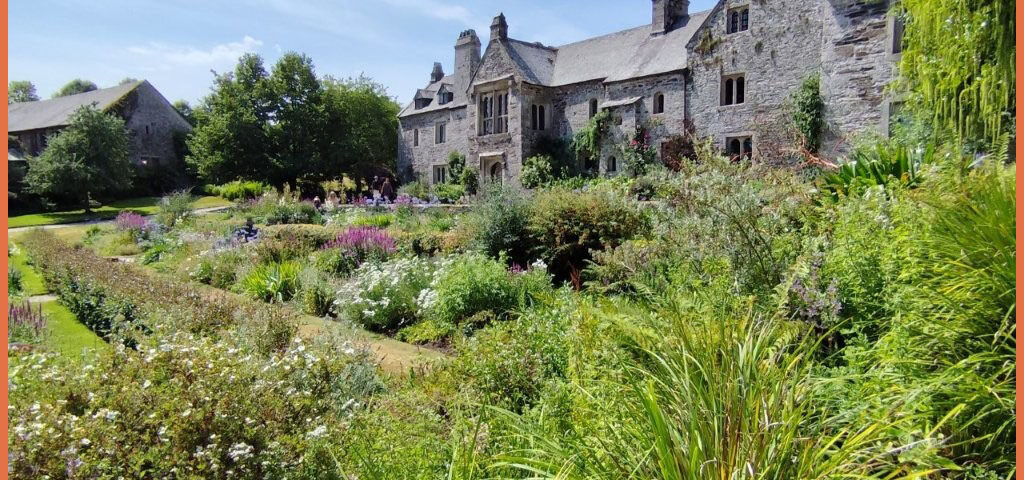
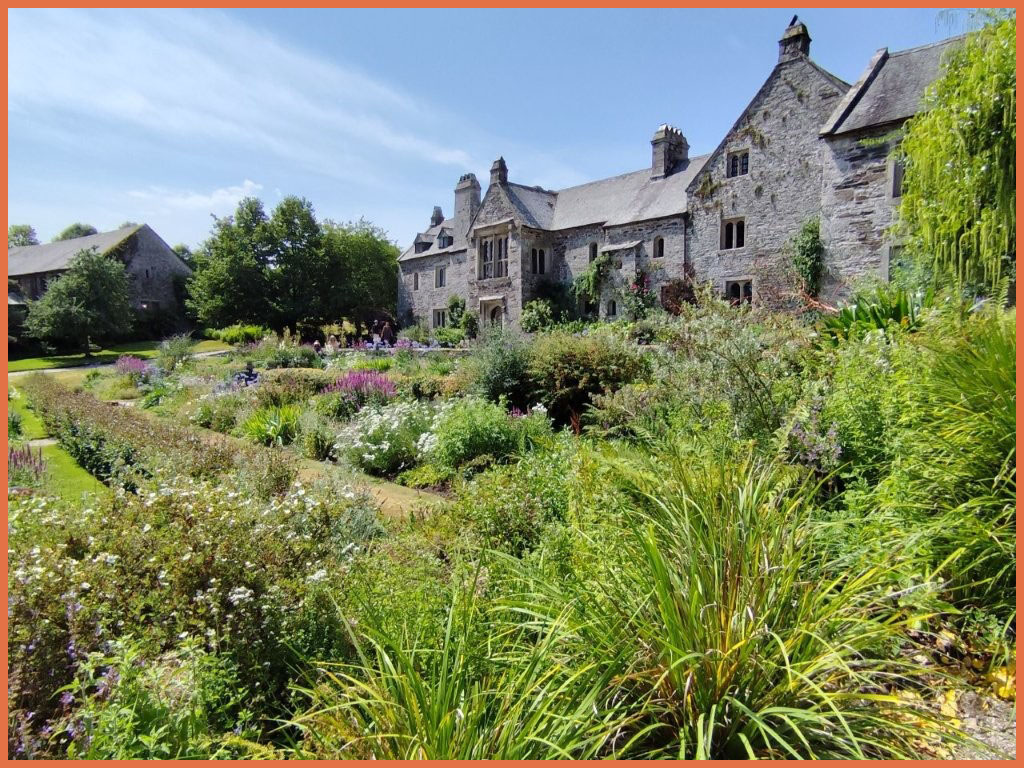
The dark green of trees and hedges contrast the pale dun of burnt land as July’s heat sets in. Rambling Cornish Cotehele, a Tudor manor house with cobbled courtyards and slabs of granite under slate, where volunteers care for 14 acres of garden and 12 acres of orchards.
Besides a medieval stew pond and dovecote, providing fish and fowl, there is a water mill and quay. This bustled with vessels in 19th century, local industries having boomed on the banks of the Tamar. Boats sailed down river to Devonport Market carrying cider for the sailors and market garden produce, in particular strawberries and daffodils which Cotehele now has three hundred varieties, and paddle steamers jaunted upriver to see the Tamar Valley’s blossoming orchards.
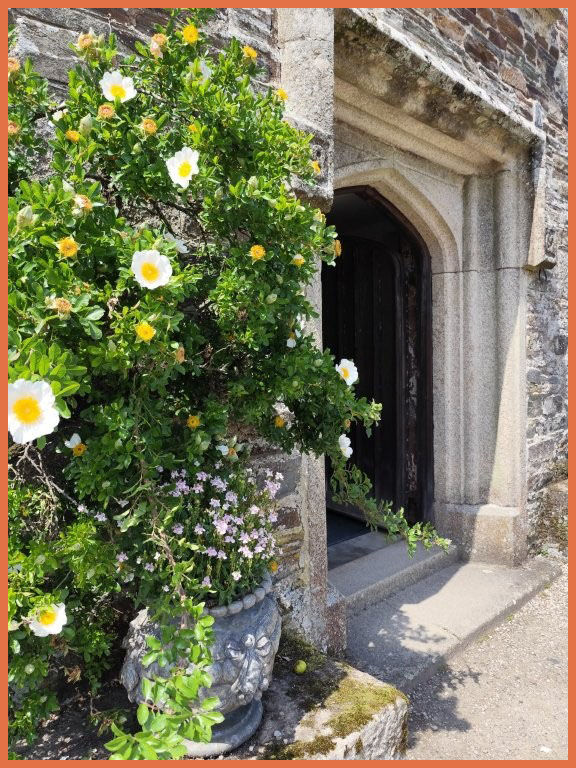
The ancestral home of the Edgcumbe family, possibly before 1353, its Cornish place-name ‘Cotehulle’ means ‘wood by the riverside’. Cotehele was described as a ‘mansion place’ in the 1480’s. Henry Tudor having knighted Richard Edgcumbe at Bosworth, and rewarded him with more land, a position in the royal household and controller of Devon and Cornwall’s royal silver and lead mines. A small chapel dedicated to St George and St Thomas a Becket commemorating his daring to rebel against Richard III.
In 1493 the son married an heiress, building Mount Edgcumbe at the mouth of the Tamar, so benefitting from the developing economy of Plymouth, but spending time in both homes. The North West tower was added and after the civil war remodelling undertaken when the family, keeping a lower profile, made Cotehele their main residence.
In the 18th century unwanted furnishings from refurbished Mount Edgcumbe were sent up river and so began ‘Antiquarian’ Cotehele as an ancestral seat: hosting King George III and Queen Charlotte in 1789 when the Queen commented on the novelty of such an ‘ancient’ family home. By 19th century tourists were encouraged and a guidebook published in 1840, included lithographic prints of the house by local artist Nicholas Condy.
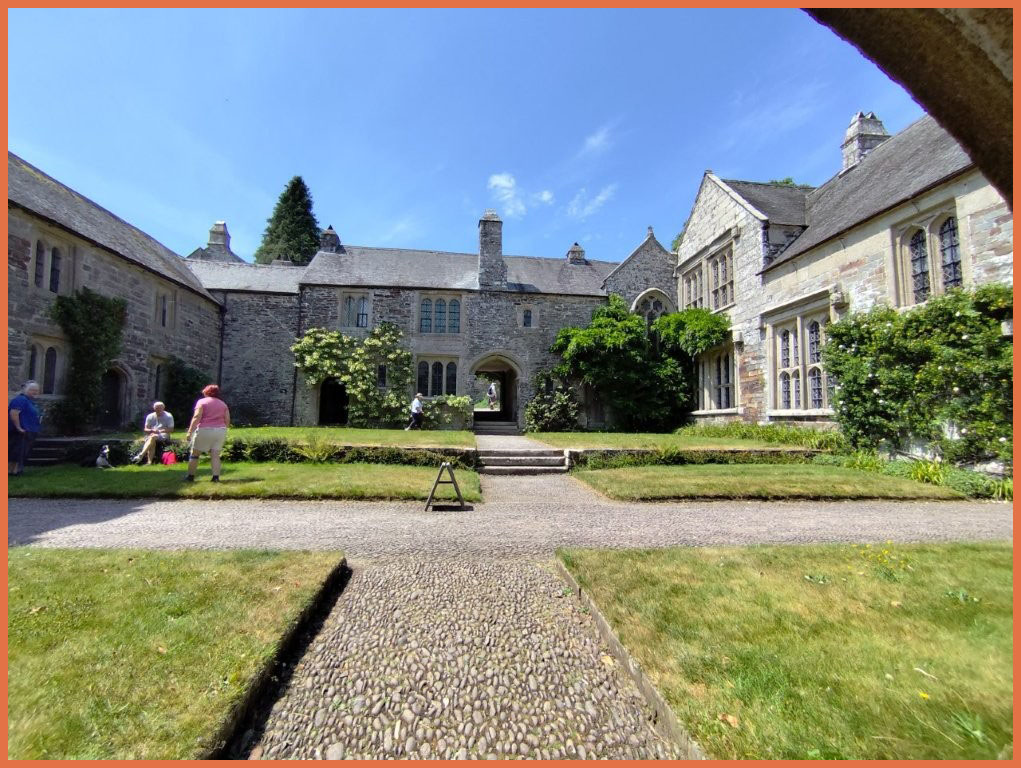
After 1865 the widowed Countess Mount Edgcumbe moved to Cotehele with her daughter; new rooms were created giving views down to the river and valley garden which was developed by her, with European and Australian seeds collected by her son. Her half- brother, William Henry Fox Talbot, also sent seeds from Lacock Abbey.
In 1944 Kenelm Edgcumbe inherited and although describing Mount Edgcumbe as a ‘smoking ruin’, he rebuilt it. Cotehele the ‘antique manor house he gave to the National Trust, commemorating it as a NT war memorial to Lieutenant Piers Edgcumbe.
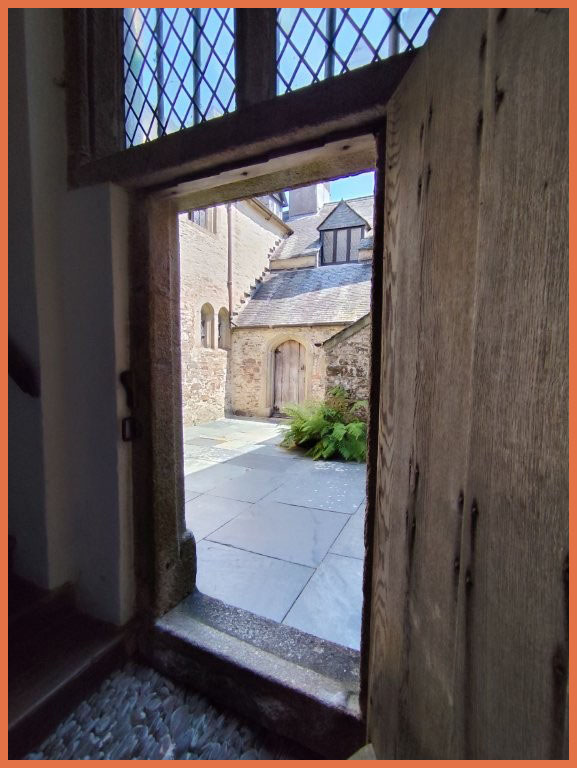
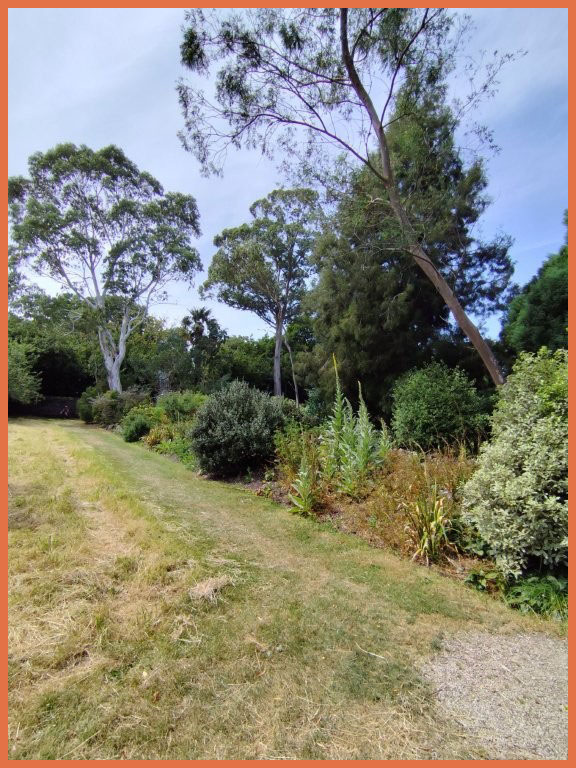
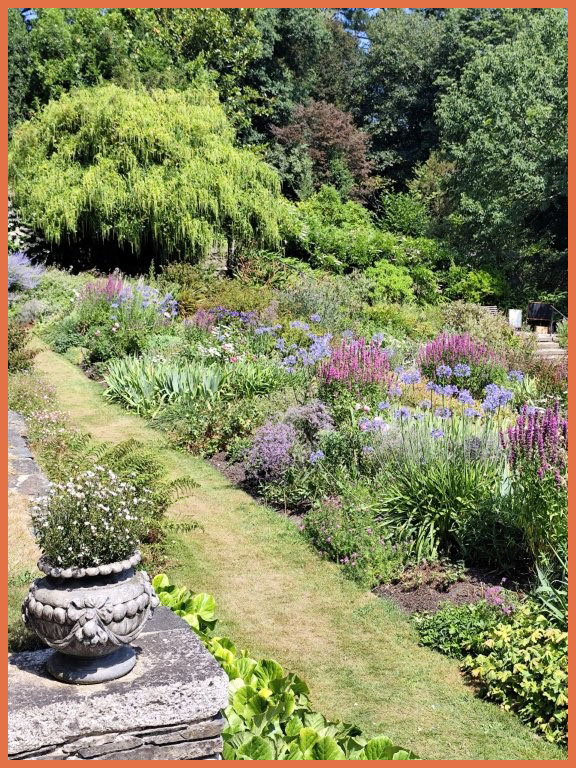
The East Terraces of seasonally herbaceous borders of hydrangeas, roses, geraniums, irises, salvia, Centaurea Montana and Centaurea Montana Alba and Veronicastrum has a tunnel leading to a wild Valley Garden with a thatched Victorian summerhouse.
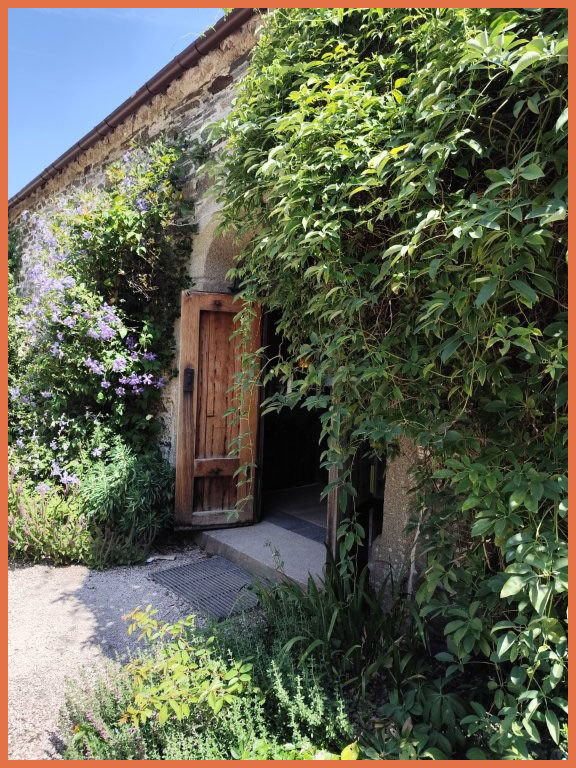
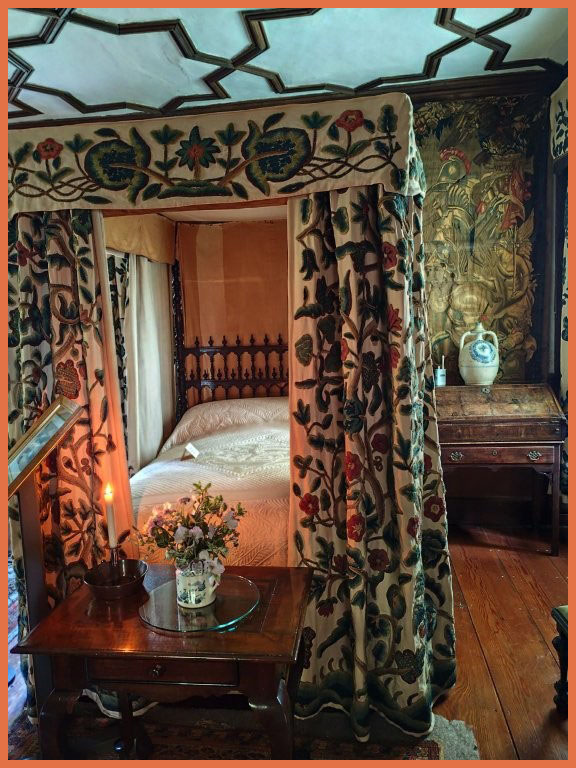
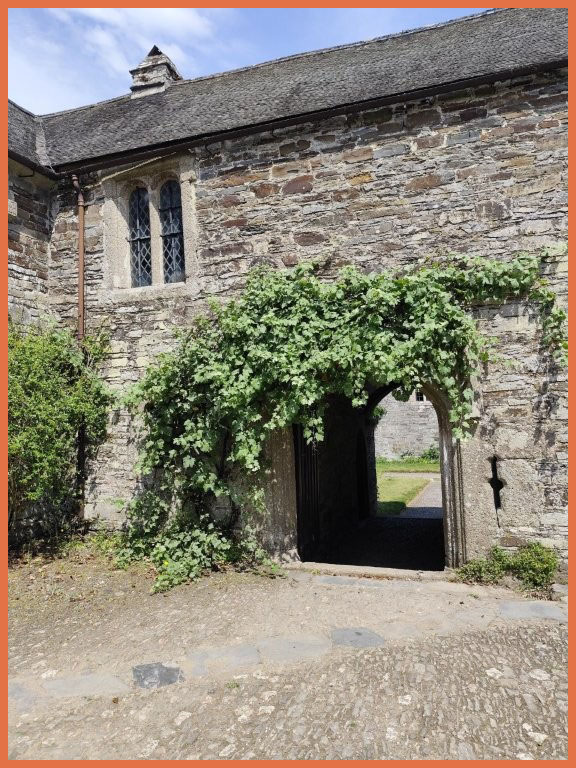
Passing through the 1862 doorway and on to the Hall Court with the oldest buildings: the Great Hall and Chapel, as well as the slightly younger kitchen. From the Kitchen Court stairs ascend from a swirling pattern of interior cobbles up to an atmospheric White Bedroom with its china closets and necessary.
Leaving the manor house by way of the café barn and bull pen, some steep steps were finally found leading up . . .
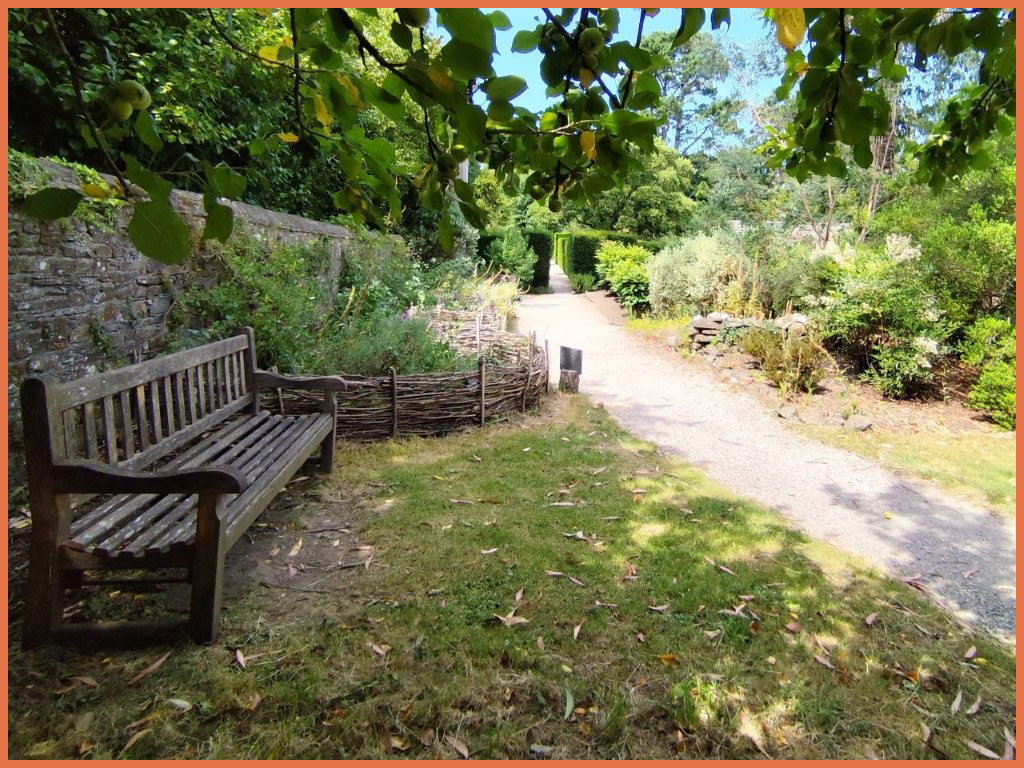
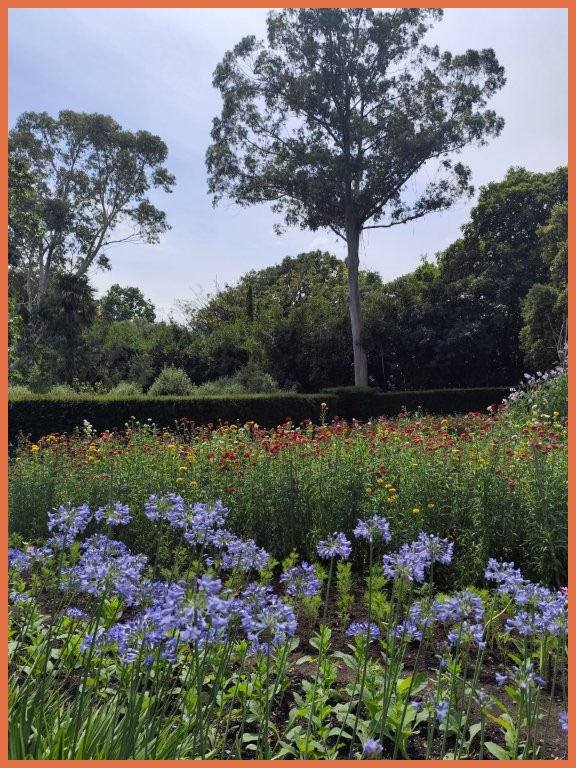
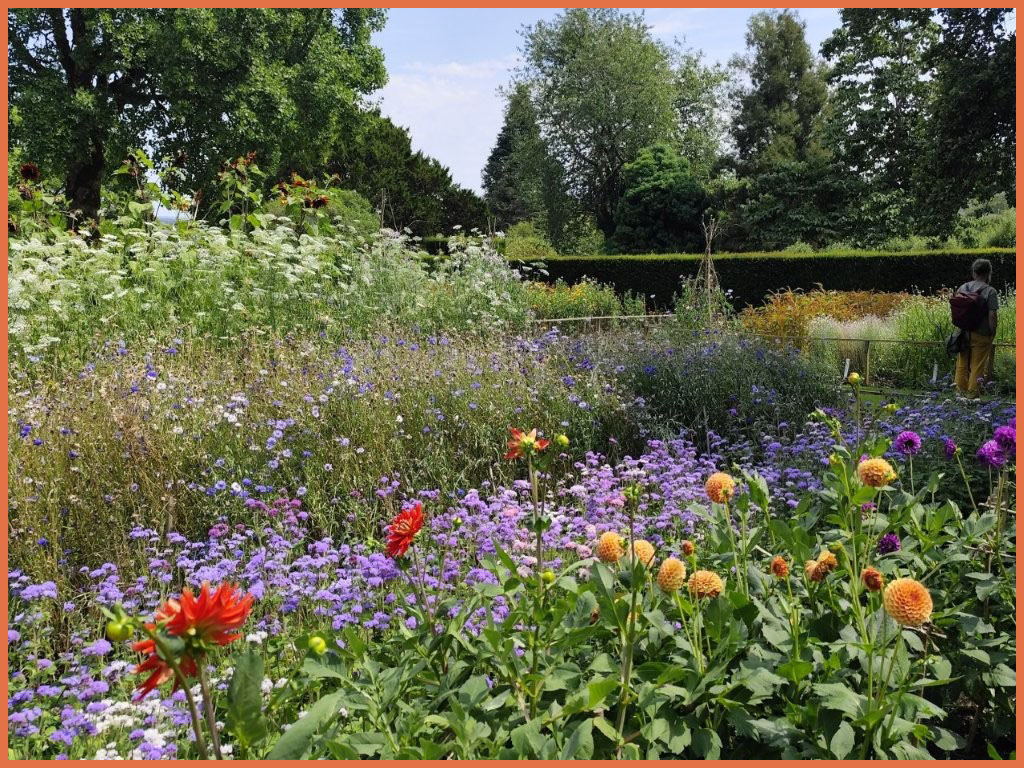
In the 16th century The Old Orchard was part of a wider deer park surrounding the garden and the former pond, today it has a variety of fruit trees, some dating back to 1960. Bordering this and Mrs Julyan’s Garden are two borders divided into separate beds, suffering from the drought, a long border gives way to a hurdled herb border, then to more lush and shaded areas and the greenhouse garden. Further away The Mother Orchard was planted in 2008 with mainly West-country and heritage varieties of apple tree: Cornish Honeypinnick, Limberlimb, Pig’s Nose and Lemon Pippin.
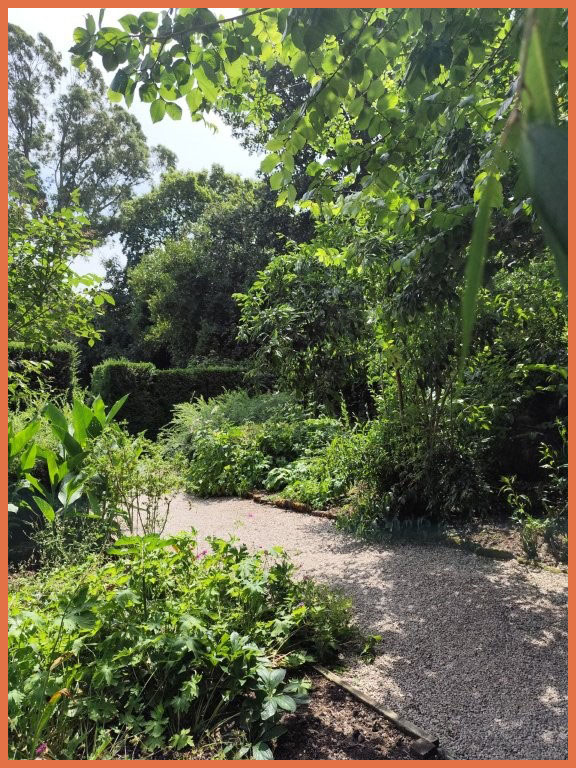
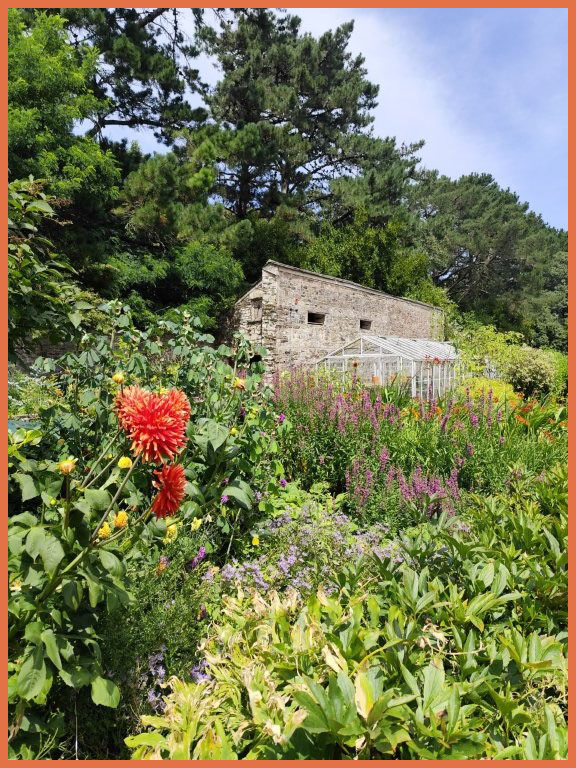
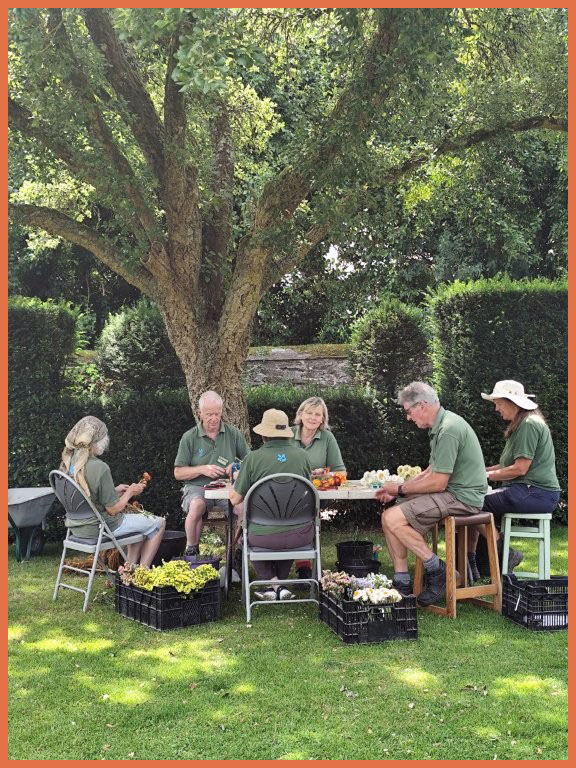
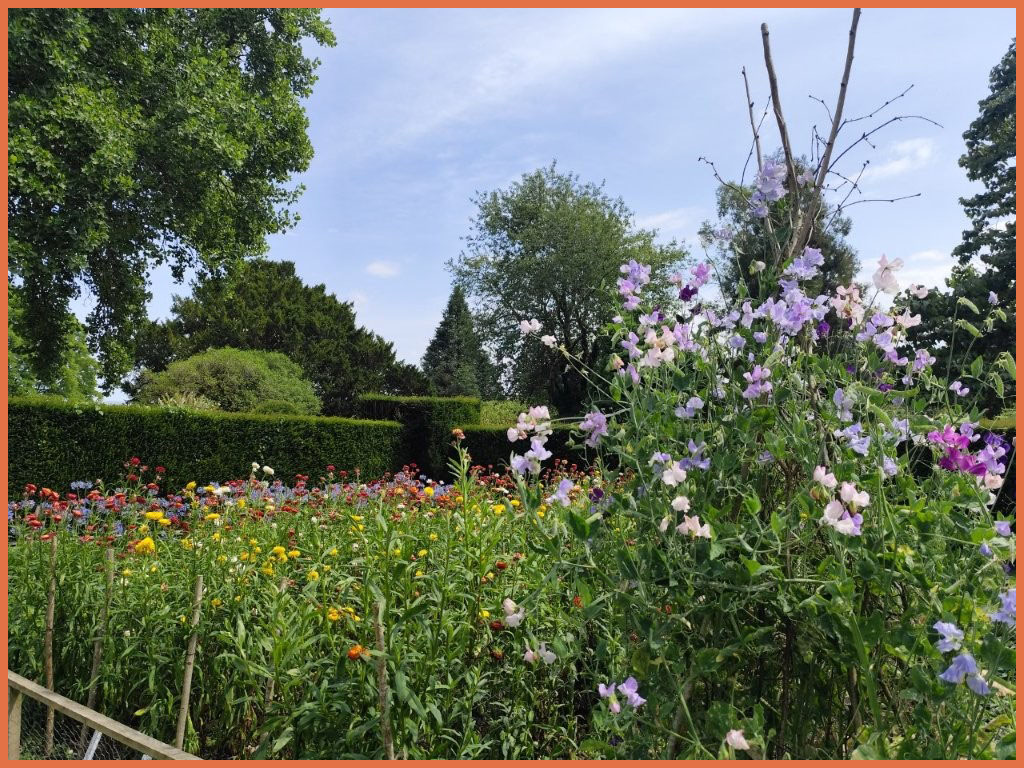
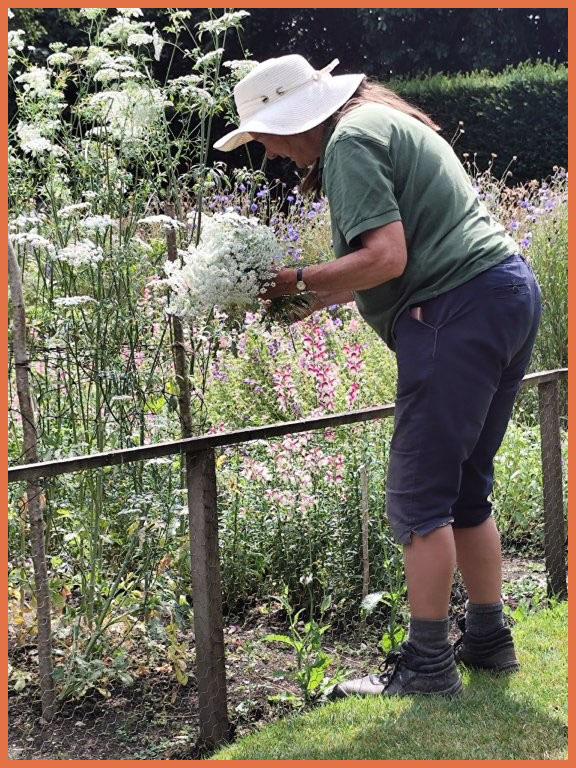
In the Cut Flower Garden volunteers were busy tending the flower beds and processing flowers for a famous Christmas dried flower garland, all was looking colourful and verdant.
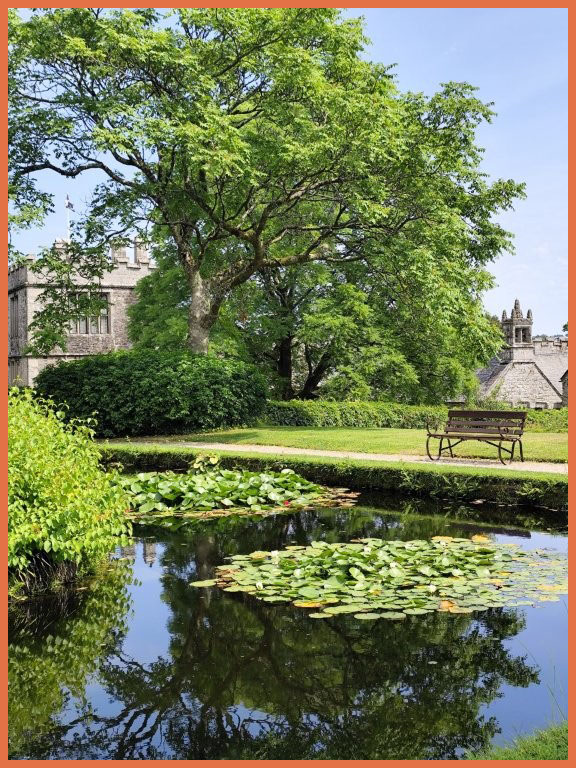
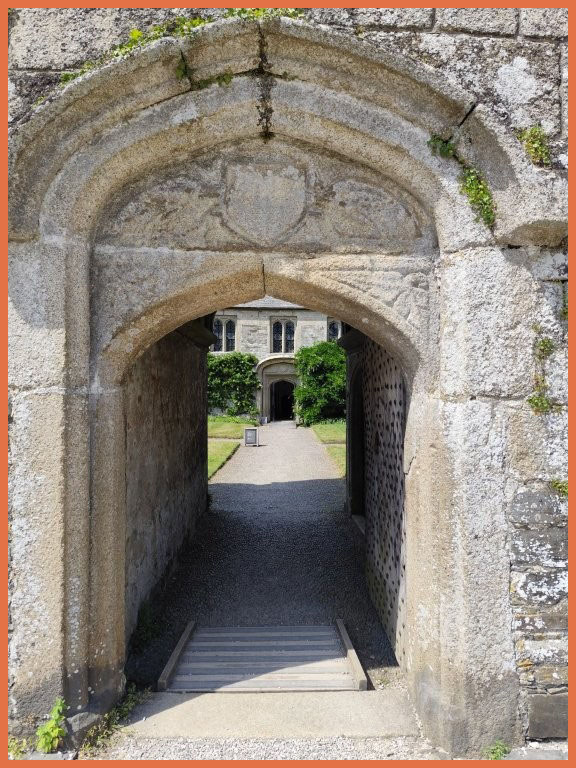
Adjacent is the herbaceous border of the Upper Garden, which has a central pond and island surrounded by water lilies, above sunflowers were bowed along one wall. Graham Stuart Thomas advised on the planting scheme in the 1960s. With lowered head a path leads to the Retainers Court where a low arrow slit by another Hall Court archway, would cause intruders to hesitate, a narrow path overlooked by ancient small barred windows leads to Base Court with the Frontal Arch.
The Cotehele antique collection from around the globe can be viewed online, but without early provenance, as Mount Edgcumbe archives were destroyed during WWII bombing.
This turret clock in the chapel is the oldest unaltered domestic clock in England, time indicated by striking of the hour not the clock face.
A late 15th century English boar’s head tapestry, the Edgcumbe crest, sewn into a 17th-century Dutch tapestry highlights the re-use of items. Many tapestries were cut to fit within rooms and as Queen Charlotte observed ‘chair seats made from priests vestments’.
Text & Photos by Sarah Herring